- Crazy Pablo
- Posts
- Crazy Pablo: Light and Darkness by Yoko Ono
Crazy Pablo: Light and Darkness by Yoko Ono
This summer, I wandered through Berlin’s vibrant art scene and visited several thought-provoking exhibitions. One work in particular stayed with me—quiet, minimal, almost nothing at all. But like a good haiku, it said everything. It’s the one I chose to start with.

Inbal Zakai
September 14, 2025
First time reading? Sign up here.

A Tiny Flame on a Timeline
In the video, Match Piece (1955–1985), Yoko Ono sits in front of the camera and repeatedly strikes matches—one after another, each briefly flaring before fading into darkness. No words, no soundtrack, just the rhythmic gesture of ignition and disappearance. The simplicity is disarming, almost hypnotic. But beyond the repetition lies a meditation on impermanence, presence, and the fragility of time. Each flame becomes a life—brief, beautiful, vulnerable.
In Zen terms, it’s an act of witnessing: being fully present with what is, even as it vanishes. Ono doesn’t explain. She invites you to feel. The gesture becomes a ritual, the silence becomes language, and the match becomes a metaphor for all things fleeting. Time is running out.
 Yoko Ono - instruction pieces  Yoko Ono - instruction pieces | Fun Fact Before she was known as John Lennon’s partner, Yoko Ono was already a star of the New York avant-garde: holding solo shows, performing radical pieces, and publishing her now-legendary Grapefruit book (1964). Hammer nails into a canvas. Yoko Ono Art, in Ono’s world, is not just something to look at. It’s an act, something to do, to feel, to ignite - sometimes quite literally. |
Think About It 🤔
Do this. Don’t do that. Ono’s art often comes in the form of instructions—commands, really. But who gets to decide which instructions are art, and which are control?
Throughout history, regimes have feared art precisely because it tells people to do something—think differently, imagine otherwise, question authority.
In Nazi Germany, modern art was labeled degenerate and banned. In Maoist China, even a brushstroke in the wrong style could be seen as subversion. North Korea, Iran, and more recently Hong Kong—all have censored or punished artists who dared to act.
So when Yoko Ono calmly invites us to hammer a nail into a canvas, or to light a match in the dark, she’s asking more than just "Will you do it?"
She’s really asking: Who do you let tell you what to do - and what not to do?
How does it relate to the here and now? or What to say during casual conversation to show off your art knowledge?
The Passing of Time – “Watching Yoko Ono strike match after match reminded me of how short our attention spans have become. Her piece makes you stop and feel the weight of each moment instead. It’s a quiet meditation on how time slips away”
Obedience and Control – “In some regimes, art that questioned authority was banned or destroyed. Yoko Ono flips that idea - her 'instruction pieces' invite you to follow, but only if you choose to. It’s a reminder that even when someone tells you what to do, the act of choosing to obey - or not - is deeply personal, and often political.”
Now have another Look!

White Chess Set / Play It by Trust, Yoko Ono, 1966 (revised 1986‑87), all-white chessboard and pieces, exhibited at Indica Gallery, London; also in M+ Hong Kong collections.
To keep playing chess until you no longer remember who is who.
And If You’re Up for More…
After experiencing Ono’s quiet fire in Berlin, head to K20 in Düsseldorf, where Yoko Ono: Music of the Mind continues through September 29.
Craving more Yoko Ono later this year? Insound/Instructure opens November 2025 at MUSAC in Castilla y León, Spain - exploring her legacy through sound, instruction, and conceptual play.
Till next time, As we learn to appreciate each fleeting moment—and remember to tell black from white, right from wrong—I’d truly love to hear your thoughts on this piece.
Hit reply or drop a comment.
Yours,
Inbal Z M

*NEW on Crazy Pablo:
Crazy Pablo Picks
Once a month, I spotlight an artist worth knowing
unique, inspiring,
and available to collect.
Rafa Pérez Alegre turns paper scraps, photos, and everyday leftovers into poetic chaos. Inspired by collage masters like Rauschenberg and the philosophical touch of Tàpies, his works feel like visual puzzles – poetic fragments waiting to be reassembled by the viewer.
Exclusive for Crazy Pablo subscribers – enjoy a special collector’s code
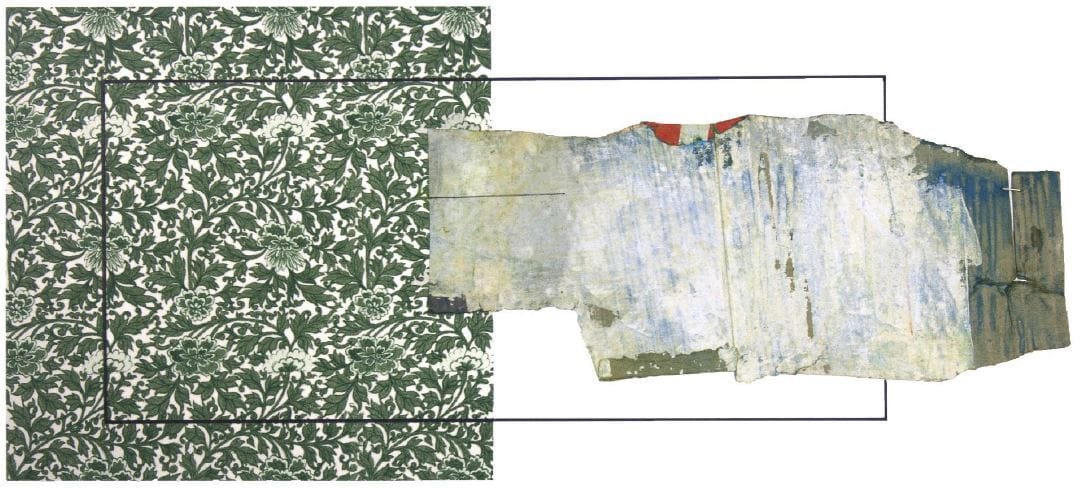
Mixed media: paper, cardboard, acrylic paint. 45 x 62 cm.
Framed in white and available. Price 600 euros
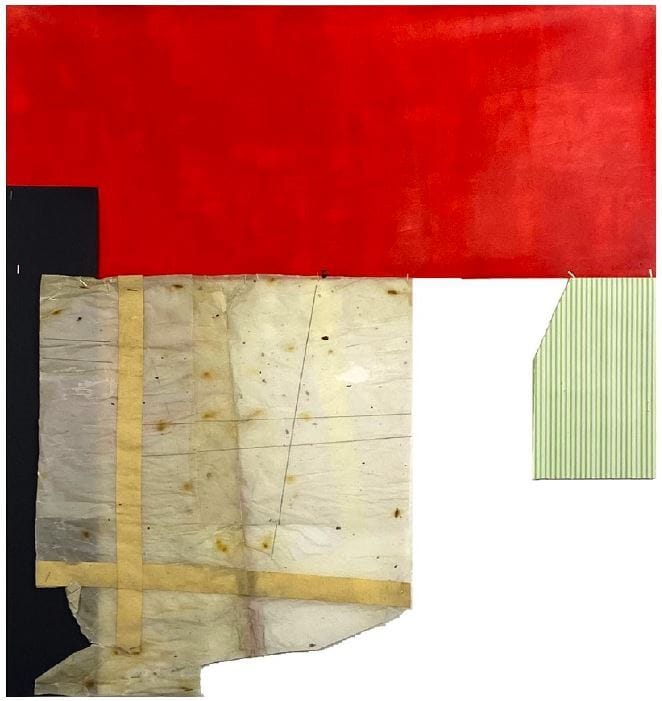
Mixed media: paper, photography, cardboard, staples. 88 x 84 cm.
Framed in a wooden box and available. Price 1.200 euros
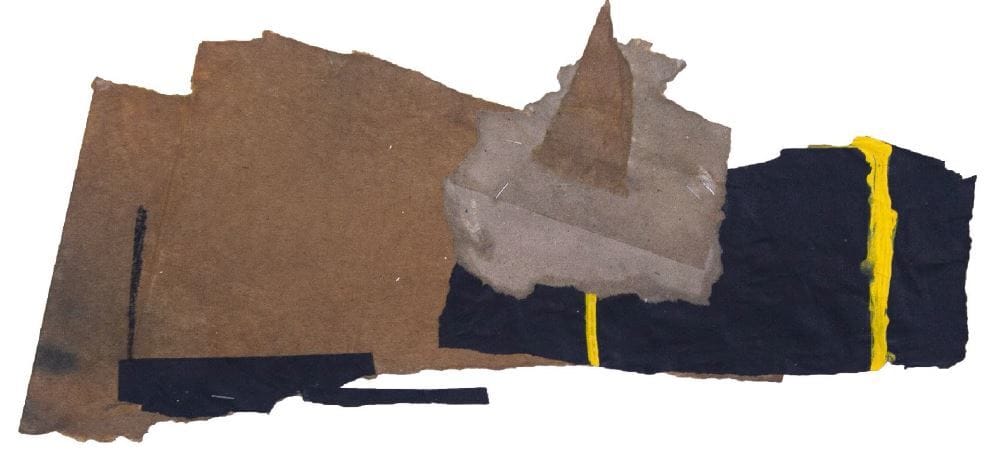
Mixed media: paper, cardboard, acrylic paint. 38 x 61 cm. Not framed and available. Price 500 euros
Visiting Madrid? Rafa welcomes visitors to his studio by appointment
(Paseo Marqués de Zafra 37)
Available exclusively through Crazy Pablo with a special subscriber discount.
Reply