- Crazy Pablo
- Posts
- Crazy Pablo: Between Two Wars and One Giant Grasshopper
Crazy Pablo: Between Two Wars and One Giant Grasshopper
This week, I found myself wondering - not for the first time - where today’s wars and conflicts might take art next. Will we see something radically new emerge? Or will we circle back to the raw, dreamlike visions born between the world wars? That question led me to one unforgettable canvas I saw at the Reina Sofía: The Great Masturbator by Salvador Dalí. A painting that’s sensual, fractured, and deeply surreal...

Inbal Zakai
October 12, 2025
First time reading? Sign up here.

Gala & Dali (marked red)
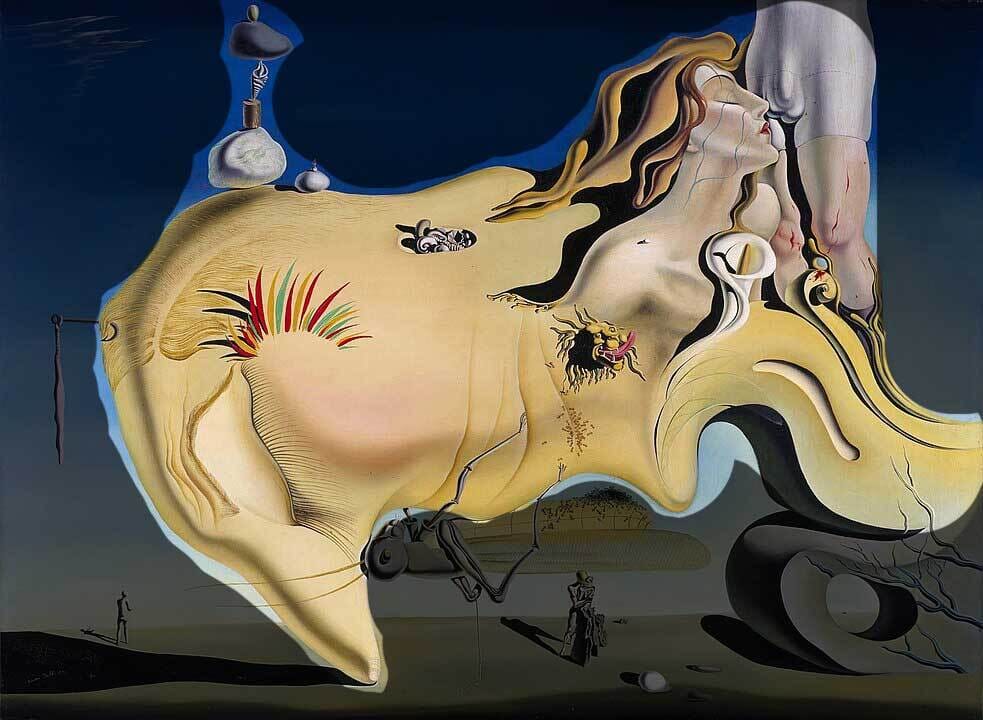
In the upper part of the main distorted head (which itself lies face-down), a female figure - often interpreted as Gala, Dalí’s muse - emerges from the head. She is both the object of desire and tension, intimately tied to his fears and fantasies. Her body is ethereal, delicate, yet assertive. Within the landscape of the mind, she represents the erotic impulse, the lure that both fascinates and terrifies.
The Grasshopper (marked blue)
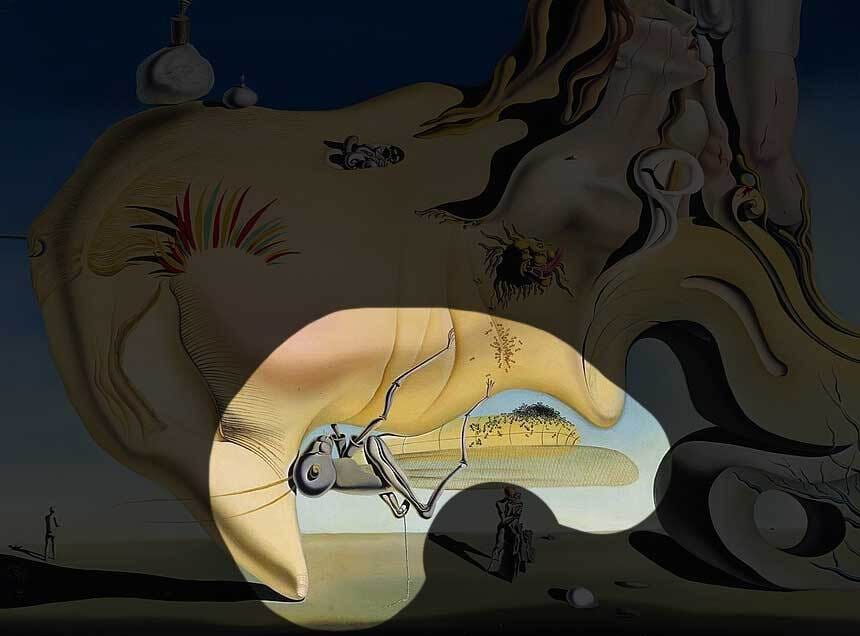
Across the “mouth” area, a large grasshopper is perched. It’s one of Dalí’s recurring phobias and symbols. This insect, decomposing, associated with decay and repulsion, intrudes upon the erotic imagery and suggests fear, corruption, or contamination - an ambivalent presence in the erotic fantasy.
Dream Space (marked green)
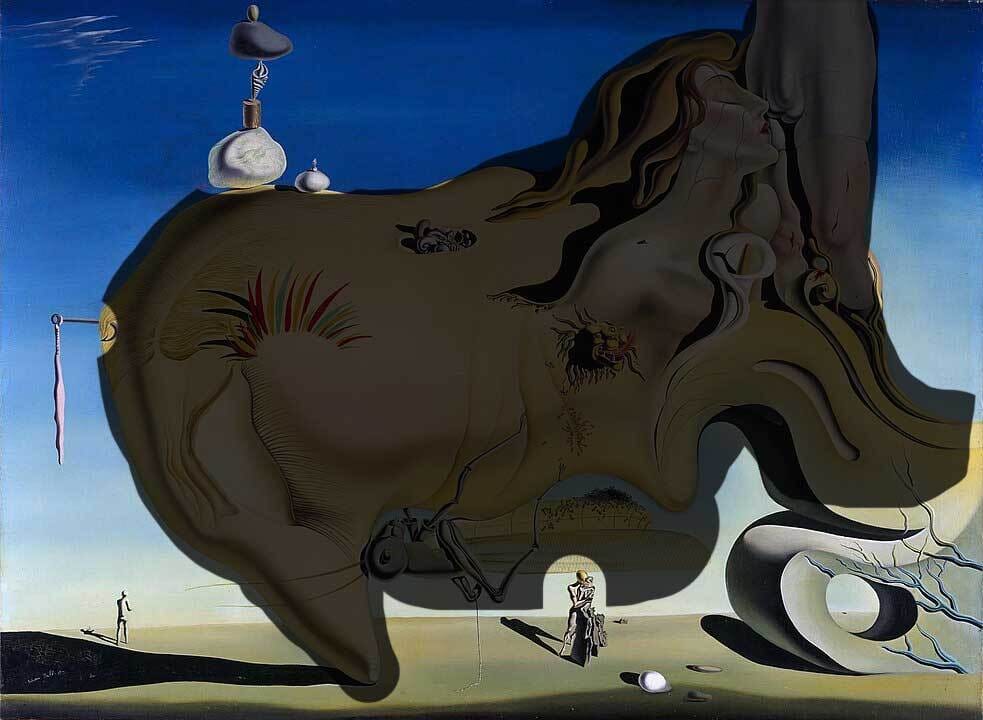
The rest of the canvas unfolds a barren dreamscape: distant cliffs, a horizon, a scattered egg, ants crawling, and ambiguous forms. These surroundings frame the central figure and provide both space and isolation.
The dream space is psychologically charged, as if the inner world has seeped into the external world. Dalí later said he painted the rock shapes from Cap de Creus as homage to his homeland, merging internal states and real geography.
Fun FactDalí was deeply influenced by Sigmund Freud and psychoanalysis, seeking to visualize the unconscious, the forbidden, the repressed. The Great Masturbator is often read as a self‑portrait of his anxieties about sexuality, shame, potency, and desire. Interestingly, Dalí never sold this painting and kept it in his studio until his death - suggesting it held intimate personal value. Some historians argue that Dalí’s work also echoes Einstein’s theories of relativity, time, and space - he was fascinated by modern science and sometimes referenced scientific ideas in his imagery. |

Think About It 🤔
Dalí painted The Great Masturbator in 1929, between two world wars, during a time when Europe was reeling from trauma and searching for meaning in a rapidly changing world. Like other Surrealists, Dalí turned inward, believing the unconscious mind held deeper truths than rational thought ever could.
He was fascinated by automatic drawing - a method of letting the hand move freely without conscious control - and by the dream logic promoted in André Breton’s Manifesto of Surrealism. The painting’s melting forms and bizarre juxtapositions echo these methods, as if Dalí was walking through a dream.
Rather than presenting one “truth,” Surrealism offered access to a deeper, fragmented reality - one that feels eerily familiar, even if we can’t explain it.
How does it relate to the here and now? or What to say during casual conversation to show off your art knowledge?
The Mind as Landscape – “Dalí’s empty horizons, ants, insects: they remind us that our inner world never stays private. Politics, media, and social platforms map those landscapes for us, turning psychological conflicts into public spectacle.”
Now have another Look!
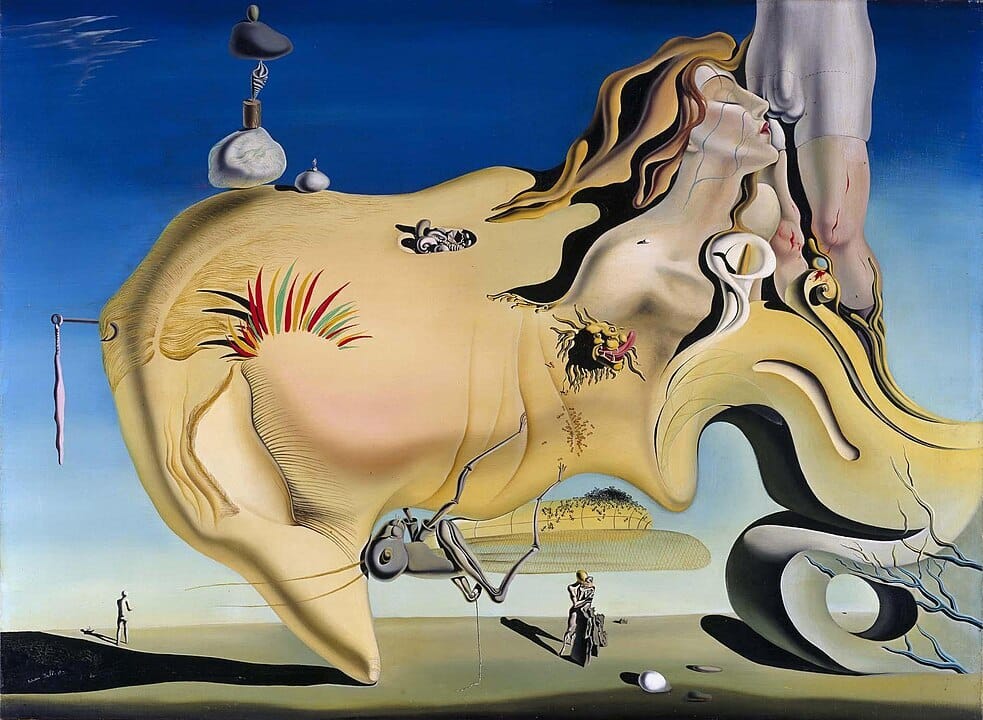
And If You’re Up for More…
To dive deeper into Dalí’s mind, visit the Dalí Theatre-Museum in Figueres, Spain. Designed by the artist himself, it’s part museum, part dreamscape - a surreal labyrinth filled with melting clocks, floating figures, and one very strange ceiling.
Want something more personal? Head to Dalí’s House in Portlligat, a whitewashed labyrinth on the rocky coast of Catalonia where Dalí and Gala lived and worked. It’s quieter, stranger, and gives a glimpse into the private life behind the public persona.
Till next time, when your dreams push you into shame or longing, tell me - what shape did your thoughts take? Reply or comment - I’m listening.
Yours,
Inbal Z M

Reply